News
delivering heat decarbonisation at scale
de
Futurebuild 2026
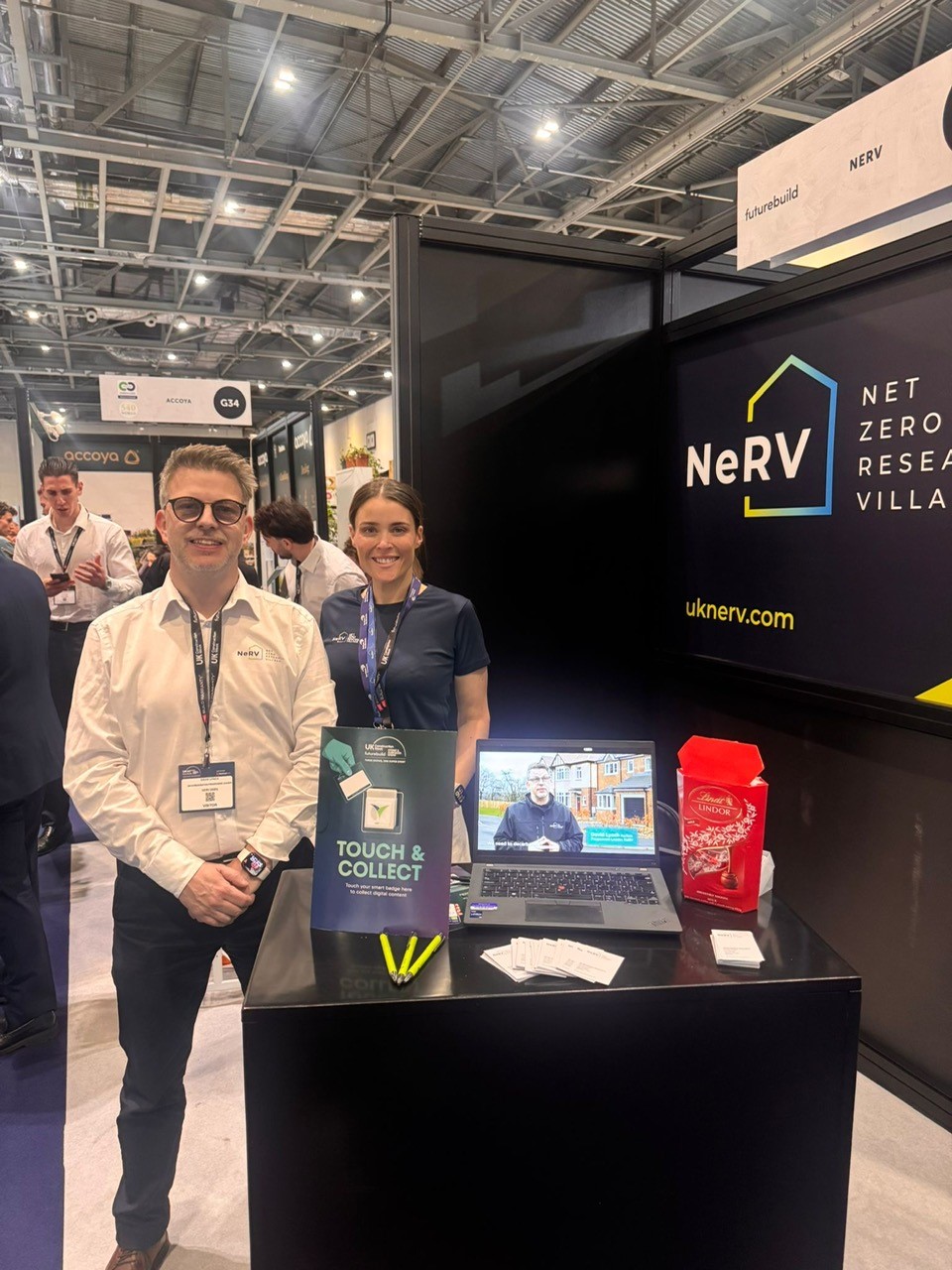
Last week, the team headed to London for Futurebuild 2026 for 3 days of insightful conversations about one of the biggest challenges facing the built environment: how to decarbonise heat in a way that works in the real world.
It was an action-packed few days and when we weren’t on stand chatting with industry, innovators and policymakers, we took the opportunity to attend some of the seminars.
ICYMI, here are our top takeaways …
1. Moving from ambition to action.
There’s no shortage of plans, policies or pilot projects but the focus now is on delivery at scale. Organisations are under increasing pressure to demonstrate real progress – not just ambition – as programmes move from design into implementation.
2. Energy efficiency and heat decarbonisation go hand in hand.
Improving building fabric and deploying low carbon heating are two sides of the same coin. Creating warm, healthy homes while reducing emissions depends on addressing both together, not in isolation.
3. Whole systems thinking is essential.
It’s increasingly clear that no single technology will deliver net zero. Heat pumps, heat networks, controls, data and building fabric all need to work together as part of a coordinated system. Success depends on how well these elements are integrated.
4. Delivery capability is the new priority.
Skills, supply chains and delivery models are now the limiting factors. The sector needs the capability to install, commission and maintain solutions at scale – and to do so consistently and to a high standard.
5. Data and real-world performance matter more than ever.
There is growing recognition that measured performance – not modelled outcomes – is critical. Understanding how homes and systems actually perform is key to building trust and improving future delivery.
6. Scaled decarbonisation requires a backbone of network investment. Electrical network investment is paramount to support scaled decarbonisation. Area-based delivery could lead to clustered delivery of heat pumps, solar and batteries leading to localised electrical load issues.
7. Keeping the focus on people.
Alongside technical solutions, there is a strong emphasis on consumer outcomes. Affordability, comfort and confidence will be central to a fair and sustainable transition for all.
Want to know more about our role in decarbonising domestic heating? Contact us or follow us on LinkedIn for insights, case studies and updates.
Thanks to the Energy Innovation Centre for supporting us at this event.