News
Water-saving shower tests successfully completed in UK-first
Controlled and compliant testing on Futures Close
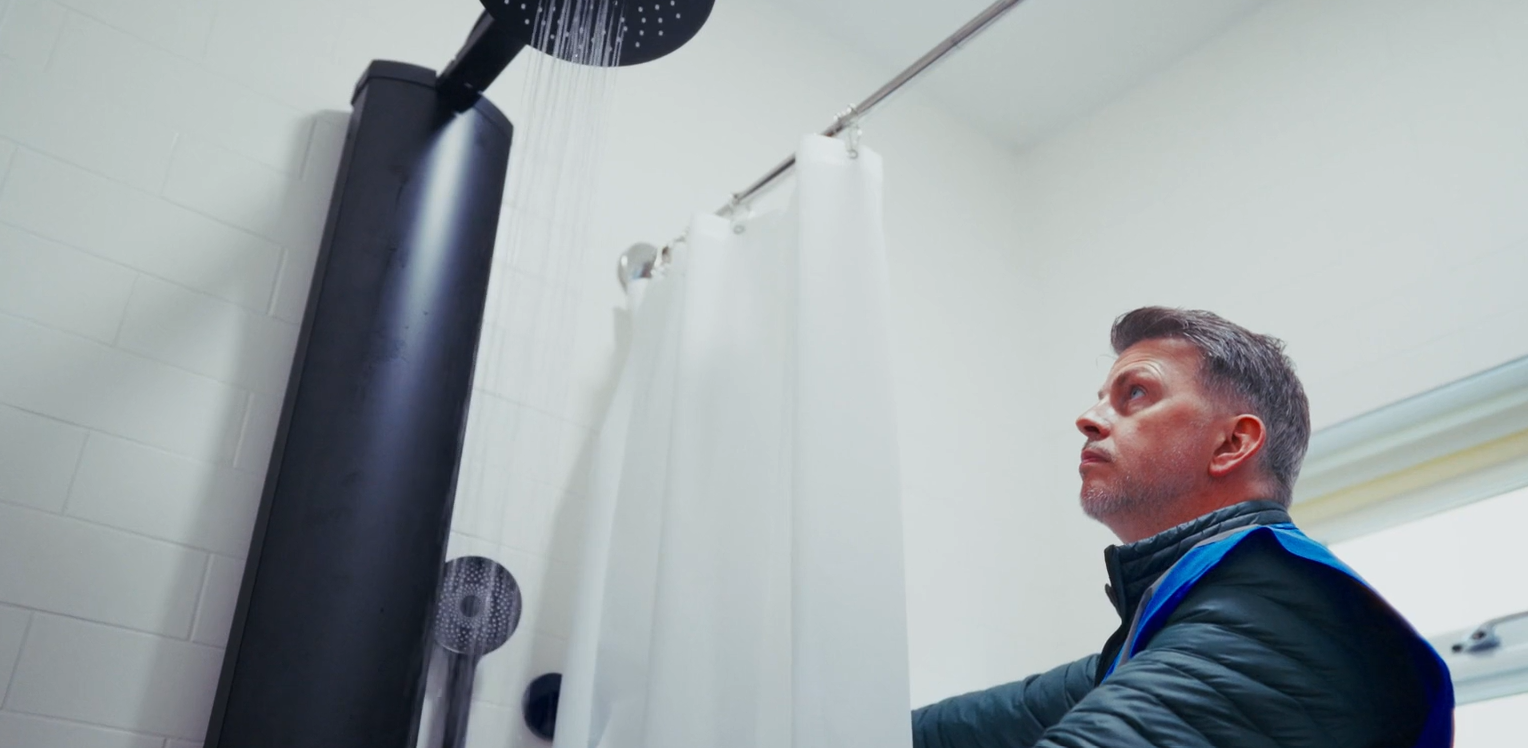
Researchers from National Energy Action and Newcastle University have successfully tested the performance and water-saving capabilities of recirculating shower technology for the first time in the UK at NeRV.
The testing is part of Fair Water – a £3.7 million project funded through the Ofwat Innovation Fund – led by Northumbrian Water Group and partners: National Energy Action, Newcastle University, Procter & Gamble and Northern Gas Networks.
Fair Water has explored how to enable lasting improvements in household water and energy efficiency in ways that are fair, practical and accessible for all households.
Exploring UK readiness for water recycling showers
Recirculating showers intentionally collect used shower water, filtering and cleaning it before reusing it during the same session.
While these showers are not explicitly banned in the UK, existing regulations are designed around the principle that once water has entered the waste system, it should not be reintroduced into a potable water system.
As a result, there is currently no clear compliance pathway to reassure manufacturers, installers, water companies and regulators that this technology is ready for routine deployment in homes.
The Fair Water testing set out to explore this challenge by monitoring the performance one product – Flow Loop – in the 1950s bungalow test home at NeRV.
The data gathered during testing means that the regulator and water suppliers now have independent evidence that …
- contaminated water cannot enter the mains supply;
- pathogens such as Legionella cannot proliferate;
- filtration and UV treatment remain effective throughout the product life;
- system failures default safely;
- maintenance requirements are understood and enforceable.
Key Findings
- Once recirculation is established, the Flow Loop shower unit significantly reduces water consumption during longer showers.
- Water consumption decreased from around 9-13 litres / minute in a conventional shower to approximately 2 litres / minute during the recirculation phase.
- The greatest savings are realised during longer shower times since an initial start-up period is required before the system reaches full recirculation mode.
Home to a unique controlled testing environment
As the Futures Close install was a UK first, the team had to secure a Regulatory Derogation Permit via Northumbrian Water Group before proceeding.
This was a vital step in making sure that the installation could progress in a controlled and compliant manner.
For more information about this project, read the research summary report.